Why Omaha Basements Leak: Clay Soil, Water Tables & Foundation Challenges
Why Omaha Basements Leak: Clay Soil, Water Tables & Foundation Challenges Basement leaks plague thousands of Omaha homeowners every year,




Your basement speaks volumes about your home’s foundation health, but many Omaha homeowners miss the subtle warning signs until water damage becomes severe and expensive to repair. Understanding what to look for and when to act can save you thousands of dollars in foundation repairs while protecting your home’s structural integrity and your family’s health.
Basement water problems rarely announce themselves with dramatic flooding. Instead, they typically begin with small, easily overlooked indicators that progressively worsen over months and years. A musty smell here, a small crack there, slight dampness that appears only occasionally, these seemingly minor issues signal developing problems that demand attention before they escalate into foundation failure, mold growth, or structural damage.
This comprehensive checklist helps Omaha homeowners identify the warning signs that indicate waterproofing is necessary. Whether you’re experiencing apparent water infiltration or just suspect something isn’t quite right with your basement, this guide provides the knowledge you need to assess your situation and take appropriate action.
The most apparent sign of basement waterproofing needs is water you can actually see in your basement. While these indicators seem straightforward, understanding their patterns and characteristics helps determine the severity of your problem and the urgency of addressing it.
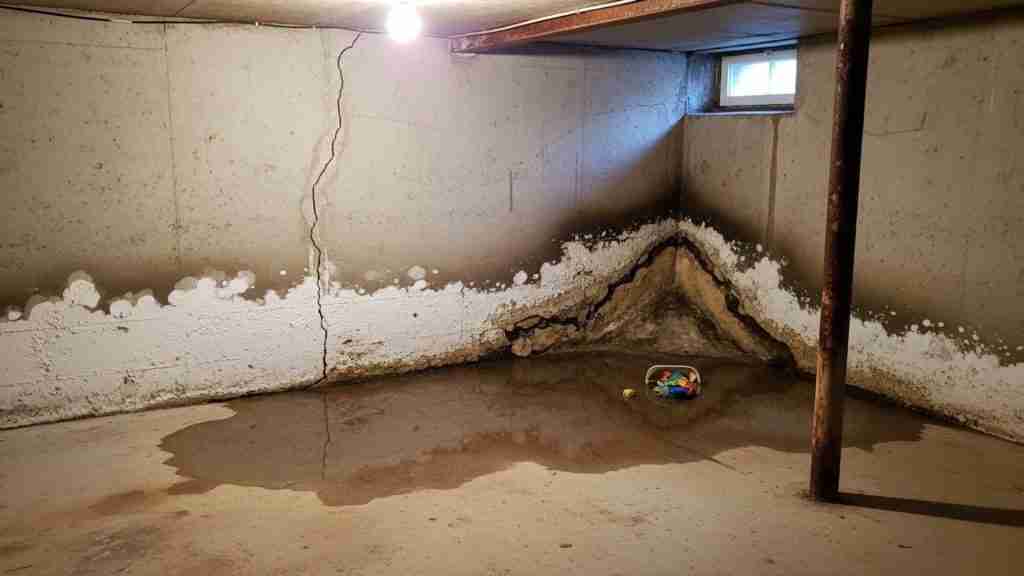
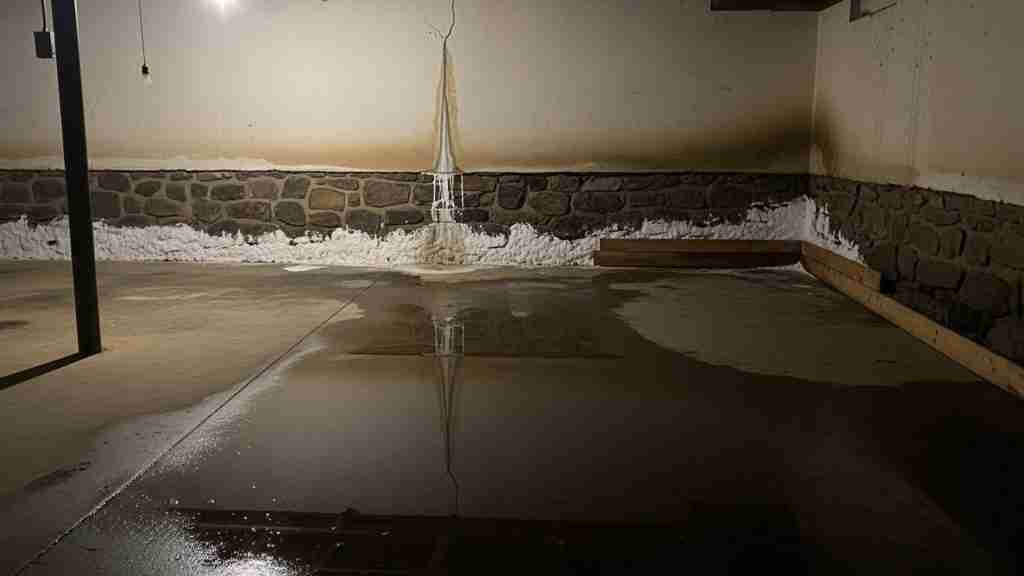
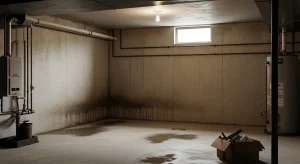
Water pooling on your basement floor after rain indicates a failure of your home’s waterproofing systems. Please pay attention to where puddles form and when they appear. Water consistently appearing in the exact locations after every significant rain indicates specific failure points in your foundation or drainage system.
Puddles forming along the perimeter, especially at the floor-wall joint, suggest hydrostatic pressure forcing water through the cove joint, the seam where your basement floor meets the walls. This is one of the most common entry points for water and typically requires interior drainage systems to resolve.
Water appearing in the center of your basement floor might indicate problems with your floor slab itself, cracks, deteriorated concrete, or water pressure from beneath the floor pushing through weak points.
Note how quickly water appears after rain begins. Water appearing immediately during storms suggests surface water infiltration, likely from poor grading, malfunctioning gutters, or inadequate surface drainage. Water appearing hours or even days after rain indicates groundwater infiltration from saturated soil around your foundation.
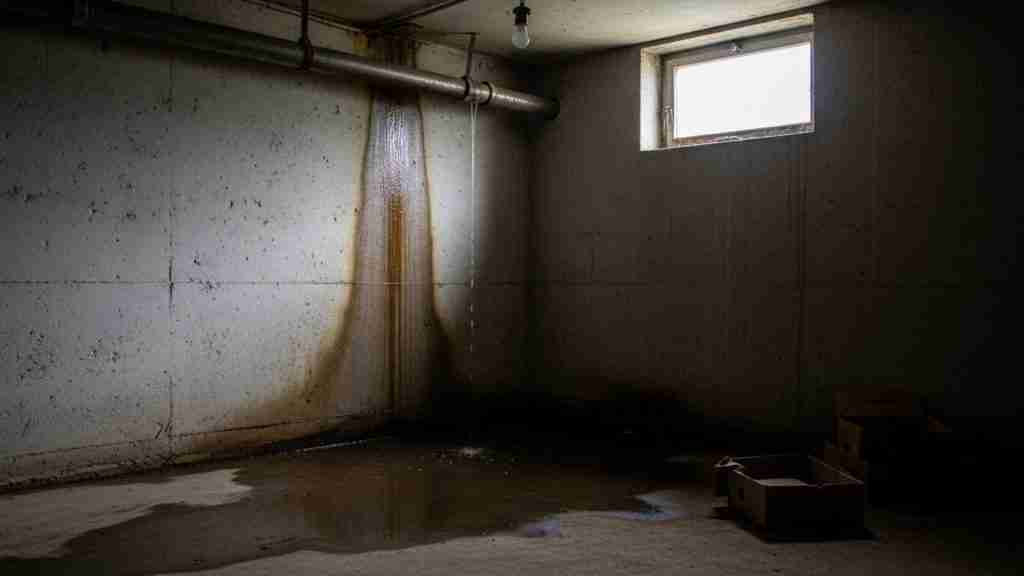
Water actively seeping through foundation walls, streaming from cracks, or flowing from the floor-wall joint demands immediate attention. These aren’t just moisture problems; they’re structural vulnerabilities that allow substantial water intrusion.
Watch for water trails down walls that appear during or shortly after rain. These indicate specific cracks or mortar joint failures where hydrostatic pressure forces water through your foundation. The water might trickle slowly or flow steadily, depending on the severity of the breach and the water pressure behind it.
Seepage through basement walls sometimes appears as general dampness rather than distinct leaks. If your walls darken with moisture during wet weather or feel damp to the touch, water is penetrating through porous concrete or multiple minor breaches rather than a single obvious crack.
Even when water isn’t currently present, evidence of previous infiltration tells an important story. Water stains on basement walls appear as discolored areas, often with a distinct high-water line marking how far water reached during previous intrusion events.
These stains typically appear brown, yellow, or gray and may show concentric rings like tree growth rings, each ring representing a separate water intrusion event. The higher the stains reach, the more severe your water problems have been.
Tide marks on basement floors, lines of dried sediment or mineral deposits, show where standing water previously existed. If these marks are high on your walls or extensive across your floor, you’ve had significant flooding episodes even if no water is currently visible.
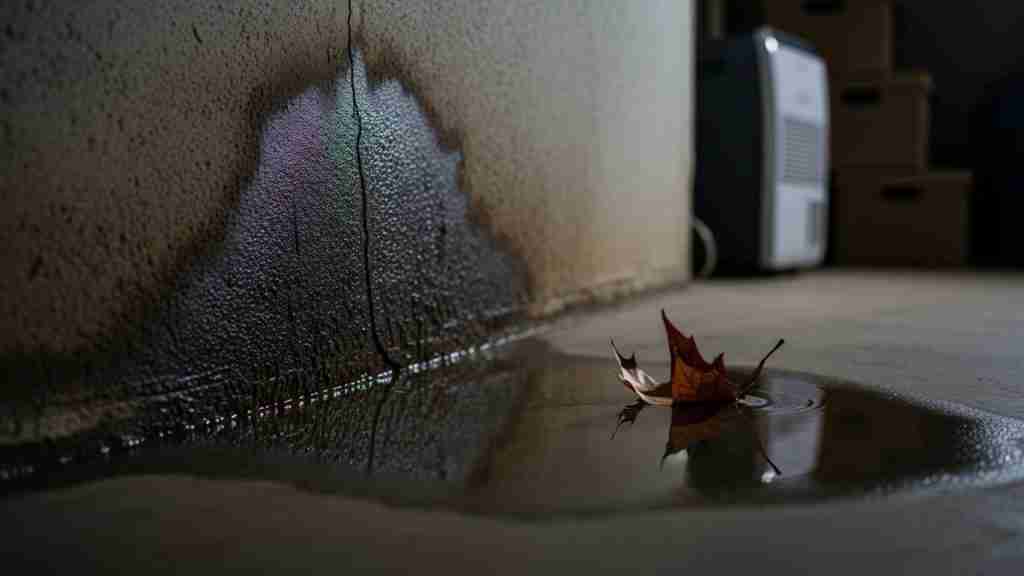
Water problems don’t always manifest as visible water. Often, the first signs appear as excess moisture creating uncomfortable, unhealthy basement conditions.
Excessive condensation forms when humid basement air contacts cool surfaces, such as concrete walls, metal pipes, or windows. While some condensation is normal during sweltering summer months, heavy or persistent condensation indicates abnormally high basement humidity, often caused by moisture entering through your foundation.
Check cold water pipes for constant “sweating” and basement walls for dampness that persists even during dry weather. If you can write your name in moisture on the walls or if water droplets form and run down surfaces, humidity levels are too high, likely due to foundation moisture infiltration.
Your nose often detects basement moisture problems before your eyes do. That characteristic musty, earthy smell indicates mold and mildew growth fueled by excess moisture. Even if you can’t see mold, the odor proves it’s growing somewhere behind stored items, inside wall cavities, or in other hidden locations.
This smell intensifies during humid weather and may diminish during dry periods, but its presence at any time signals moisture levels high enough to support mold growth. Since mold requires sustained moisture to thrive, these odors indicate chronic rather than occasional moisture problems.
Visible mold growth on basement walls, floors, stored items, or furnishings provides undeniable evidence of excess moisture. Mold appears as black, green, white, or gray patches, fuzzy growth, or discoloration on surfaces.
Check corners where walls meet floors or ceilings, areas behind stored items, and spaces around basement windows. These locations with limited air circulation and cooler temperatures create ideal conditions for mold when moisture is present.
Mildew is a surface mold that appears as powdery or downy growth and often first appears on organic materials like cardboard boxes, wood, fabric, or paper stored in damp basements. Its presence warns that conditions will soon support more serious mold growth if moisture issues aren’t addressed.
Mold isn’t just a cosmetic concern; it poses serious health risks, including respiratory problems, allergic reactions, and other health issues, particularly for children, elderly family members, and those with compromised immune systems or existing respiratory conditions.
Those white, chalky, or crystalline deposits on concrete basement walls and floors have a name: efflorescence. This occurs when water moves through concrete, dissolving minerals within it and carrying them to the surface. As the water evaporates, it leaves mineral deposits behind.
Efflorescence proves that water is penetrating through your foundation walls, even if you never see liquid water. It’s particularly common on Omaha basement walls due to the clay soils that maintain constant moisture against foundations.
Unlike mold, efflorescence is typically white or light gray and has a powdery or crystalline appearance. You can often brush it away, but it returns as long as moisture continues to penetrate the concrete. Heavy efflorescence indicates substantial water movement through your foundation.
Cracks in your foundation don’t always leak, at least not initially, but they represent serious vulnerabilities that will worsen over time, eventually allowing water infiltration and potentially compromising structural integrity.
Horizontal cracks running across basement walls are among the most serious foundation problems you can encounter. They typically indicate that hydrostatic pressure from water-saturated soil is pushing against your foundation walls with sufficient force to crack the concrete. These cracks often appear in the middle portion of walls, where the force is greatest relative to the structural support.
Any horizontal crack, regardless of size, deserves immediate professional evaluation. Even hairline horizontal cracks indicate significant stress on your foundation and will worsen as hydrostatic pressure continues acting on the wall.
Vertical cracks in poured concrete foundations are common and not always serious, but they can allow water infiltration. Cracks wider than 1/4 inch, cracks that are widening over time, or cracks that extend through the full wall thickness require professional assessment.
Diagonal cracks, especially those running at 45-degree angles from corners, often indicate foundation settlement or soil movement. These cracks frequently leak because they open and close slightly as your foundation responds to soil conditions and hydrostatic pressure.
Step cracks following mortar joints in block or brick foundations indicate differential settlement where one portion of your foundation has settled more than adjacent sections. These cracks not only allow water entry but also signal potential structural problems that require both waterproofing and foundation repair.
Foundation walls that curve inward or show visible bulging indicate severe hydrostatic pressure problems. This represents a structural emergency requiring immediate professional intervention, as walls under this much stress can eventually fail catastrophically.
You can check for bowing by holding a long, straight edge or stretching a string horizontally along the wall. Any gap between the string and the wall surface reveals inward deflection. Even deflection of just one or two inches signals dangerous structural stress.
Bowing walls require both structural reinforcement and comprehensive waterproofing to relieve the hydrostatic pressure causing the problem. This typically involves installing support systems such as carbon fiber straps, steel I-beams, or wall anchors, along with exterior drainage, to reduce pressure on walls.
Basement floor cracks can result from various causes, but cracks that widen over time or floors that heave upward often indicate hydrostatic pressure from below. When groundwater pressure beneath your basement floor exceeds the weight of the concrete slab, it can cause the slab to crack or lift.
This is particularly common in Omaha during spring when high water tables and saturated soil create maximum pressure beneath basement slabs. Floors that develop new cracks after wet weather or cracks that contain visible moisture indicate water pressure problems requiring attention.
Foundation and moisture problems don’t confine themselves to basements. They often manifest in living spaces above, sometimes before basement symptoms become apparent.
Doors and windows that suddenly become difficult to open and close, especially if they previously operated smoothly, often indicate foundation movement due to water-related settlement or heaving. As foundations shift, door frames and window frames become misaligned, causing doors and windows to bind or stick.
Pay particular attention to patterns. If multiple doors on one side of your house stick while others operate normally, that suggests settlement or movement concentrated in one area, often the area with the most serious water infiltration.
Cracks appearing in drywall, particularly above doorways and windows, radiating from corners, or running along ceiling lines, can indicate foundation movement. While some minor cracking results from normal house settling or seasonal humidity changes, cracks that widen over time or appear suddenly after wet weather warrant investigation of foundation and waterproofing issues.
Diagonal cracks that run from ceiling corners down toward door or window frames are particularly concerning indicators of foundation settlement on one side of the structure.
Floors that feel uneven when walking, slope noticeably toward one area, or have developed gaps between flooring and walls suggest foundation settlement. Place a marble or ball on the floor. If it rolls consistently toward specific areas, your floors aren’t level.
While some floor settling occurs naturally in older homes, progressive changes in floor levelness or sudden changes following wet seasons indicate foundation problems likely related to water infiltration and soil saturation around your foundation.
Walking around your home’s exterior reveals essential clues about basement waterproofing needs.
Gaps between soil and foundation walls, depressions in soil around your foundation, or visible erosion channels show that water is washing soil away or that soil is consolidating as moisture content changes. These gaps allow water to flow directly against foundation walls, creating voids that can lead to settlement.
Check for soil that has settled or eroded, leaving your foundation partially exposed. This typically occurs where downspouts discharge near the foundation or where surface water flows toward your house rather than away from it.
Your yard should slope away from your foundation at least 2-3% for a minimum of 10 feet in all directions. If the ground slopes toward your house or is flat around your foundation, surface water flows toward your basement rather than away, creating the conditions for water infiltration.
Look at your home during or immediately after heavy rain. If you see water pooling near your foundation or flowing toward your house, your grading is directing water to exactly where you don’t want it.
Overflowing gutters, gutters pulling away from your house, or downspouts discharging directly at your foundation create concentrated water problems. A single downspout can discharge hundreds of gallons during heavy rain. If that water dumps right at your foundation, it creates massive localized saturation and pressure.
Check for water staining on siding beneath gutters, erosion beneath downspout discharge points, or gutters that overflow during rain. These problems cause roof water to drain directly into the soil around your foundation.
Basement window wells that retain water after rain indicate drainage problems. These wells should drain quickly within a few hours of rainfall. Standing water in window wells eventually penetrates through window seals or through the walls around windows.
Your basement continuously tells you about your home’s foundation health and waterproofing needs. Learning to recognize these signs, from apparent water infiltration to subtle moisture indicators and structural changes, empowers you to address problems before they become catastrophic.
Not every sign demands immediate emergency action, but ignoring warning signs can allow minor issues to become major structural problems that cost tens of thousands to repair. Even seemingly small indicators, such as musty odors, minor efflorescence, or occasional dampness, signal developing issues that will worsen without intervention.
If you’ve identified multiple signs from this checklist, particularly combinations of moisture indicators and structural changes, a professional waterproofing assessment is necessary. Qualified waterproofing contractors can evaluate your specific situation, identify the underlying causes of water infiltration, and recommend appropriate solutions before damage becomes extensive.
Your home is your most significant investment. Protecting its foundation through proactive waterproofing preserves that investment, maintains your property value, and provides the dry, healthy basement your family deserves. The signs are there now, you know how to read them and when to take action.
Why Omaha Basements Leak: Clay Soil, Water Tables & Foundation Challenges Basement leaks plague thousands of Omaha homeowners every year,

Financing Basement Waterproofing in Omaha: Payment Options & Programs Basement waterproofing in Omaha is a significant but essential investment that
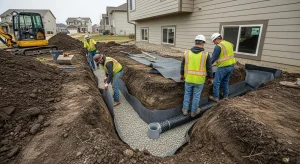
Drainage Tile Systems in Omaha: Protecting Foundations from Groundwater Drainage tile systems are among the most effective solutions for protecting
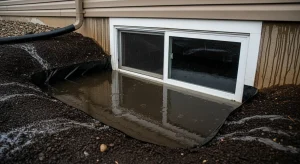
Basement Window Well Waterproofing: Preventing Leaks in Omaha Basement window wells are among the most common yet frequently overlooked sources
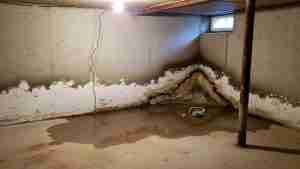
Signs Your Basement Needs Waterproofing: Omaha Homeowner Checklist Your basement speaks volumes about your home’s foundation health, but many Omaha
Signs of Basement Water Damage in Omaha Homes: Early Warning Checklist Early detection of basement water damage can save Omaha