
Why Omaha Basements Leak: Clay Soil, Water Tables & Foundation Challenges
Why Omaha Basements Leak: Clay Soil, Water Tables & Foundation Challenges Basement leaks plague thousands of Omaha homeowners every year,


Basement waterproofing in Omaha is a significant but essential investment that protects your home from water damage, foundation deterioration, and the costly repairs that result from years of moisture infiltration. The reality is that comprehensive waterproofing systems that address Omaha’s challenging clay soil and severe weather conditions typically cost $4,000 to $15,000, depending on the severity of the problem and the solutions required. For many homeowners, these costs create financial challenges despite their understanding that waterproofing is necessary to protect their largest asset. Fortunately, multiple financing options and payment programs make basement waterproofing accessible even when paying the full amount upfront isn’t feasible.
Understanding your financing options empowers you to proceed with the necessary waterproofing rather than waiting until emergency flooding creates more expensive problems that require both waterproofing and extensive water damage restoration. The cost of basement flooding, including damaged belongings, destroyed finishes, mold remediation, and structural repairs, often exceeds $10,000 to $30,000 per event. This makes financed preventive waterproofing far more economical than paying cash for flood-damage repairs, while still incurring the same waterproofing costs afterward.
This comprehensive guide explains all financing options available to Omaha homeowners needing basement waterproofing, details the advantages and limitations of each approach, helps you qualify for financing and choose appropriate terms, and helps you determine which payment strategy makes sense for your specific financial situation and waterproofing needs.
Many basement waterproofing contractors in Omaha offer financing directly or through partnerships with specialized lenders, making this often the most convenient option.
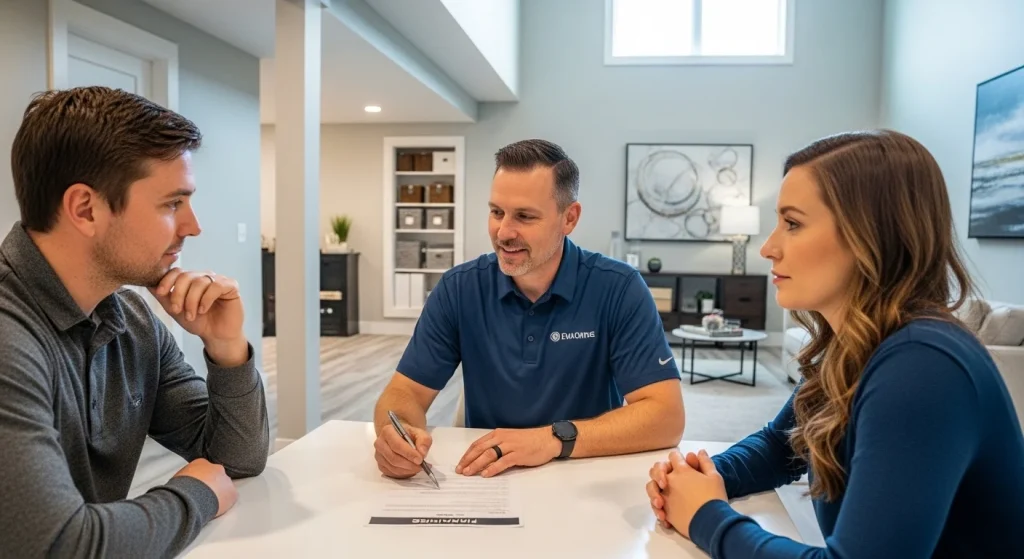
Contractors partner with finance companies specializing in home improvement lending. During your waterproofing consultation, contractors can submit financing applications electronically and often receive approval decisions within minutes. Approved customers sign loan documents, and contractors receive payment directly from lenders, allowing work to proceed immediately.
This streamlined process eliminates the need for separate loan applications at banks or credit unions. The contractor handles administrative details, and you make monthly payments directly to the finance company according to agreed terms.
Contractor financing programs typically offer loan amounts from $1,000 to $50,000, covering everything from minor repairs to comprehensive basement waterproofing systems. Repayment terms range from 12 months to 10 years or more, with longer terms reducing monthly payments while increasing total interest paid.
Interest rates vary widely based on your credit profile, typically ranging from 0 percent promotional rates for highly qualified borrowers to 25 percent or more for those with challenged credit. Some programs offer deferred interest promotions in which you pay no interest if the balance is paid within a specified period, typically 12 to 24 months.
The convenience represents the primary advantage. Application, approval, and funding happen in one location during your waterproofing consultation. You don’t need to visit banks, complete multiple applications, or coordinate payment between lenders and contractors.
Fast approval, often within minutes, allows immediate project scheduling rather than waiting weeks for traditional loan processing. For emergency waterproofing needs following basement flooding, this speed provides critical value.
Promotional rates, when available, can offer interest-free financing comparable to paying cash if you pay off your balances during the promotional period. This effectively provides free money for waterproofing while preserving your cash for other needs.
Flexible qualification standards mean approval is possible even with less-than-perfect credit. While rates increase for lower credit scores, financing remains accessible when traditional lenders might decline applications.
Interest rates for non-promotional financing often exceed rates from banks, credit unions, or home equity loans. Borrowers who don’t qualify for promotional terms may pay significantly more in interest compared to alternative funding sources.
Deferred interest promotions require careful attention. If you don’t pay the full balance during the promotional period, you owe all accrued interest retroactively from the purchase date. This can add thousands in unexpected costs if you miscalculate the timing of payoffs.
Contractor financing is tied to specific projects with specific contractors. You cannot shop rates across multiple lenders or negotiate terms as you might with traditional loans.
Home equity loans allow borrowing against the equity you’ve built in your home, typically offering lower interest rates than contractor financing.
You borrow a lump sum secured by your home, receiving the funds in a single disbursement. Repayment occurs over fixed terms, typically 5 to 20 years, with consistent monthly payments covering principal and interest.
Loan amounts typically range up to 80 or 85 percent of your home’s value minus existing mortgage balances. For example, if your home is worth $300,000 and you owe $150,000 on your mortgage, you might borrow up to $90,000 to $105,000 through home equity loans.
Interest rates typically fall below contractor financing and personal loans, often ranging from 6 to 10 percent for qualified borrowers. This significantly reduces total financing costs compared to higher-rate alternatives.
Interest may be tax-deductible when funds are used for home improvements, though tax law changes have limited this benefit. Consult tax professionals about your specific situation, but potential deductibility further reduces effective borrowing costs.
Fixed rates and terms provide payment predictability. You know exactly what you’ll pay each month and when the loan will be repaid, simplifying budgeting and financial planning.
Funds can be used for waterproofing, plus other home improvements or expenses. You’re not limited to specific contractors or projects, providing flexibility if you identify additional needs during waterproofing work.
Your home serves as collateral. Defaulting on payments can result in foreclosure, making this higher-risk than unsecured options. This serious consequence requires careful consideration of repayment ability.
Application and approval processes take longer than contractor financing, typically 2 to 6 weeks from the funding application. This delay may be problematic for urgent waterproofing needs.
Closing costs, including appraisals, title searches, and origination fees, can total $500 to $3,000 or more, adding to overall borrowing costs. These upfront expenses reduce the rate advantage for smaller loan amounts.
You must have substantial home equity. Recent homebuyers or those in areas with declining property values may not qualify for sufficient borrowing capacity.

HELOCs provide revolving credit lines secured by home equity, offering the flexibility that traditional loans don’t.
Rather than receiving a lump sum, you get a credit line you can draw against as needed during a draw period, typically 5 to 10 years. You pay interest only on amounts actually borrowed, not the entire credit line.
After the draw period, repayment periods begin, typically 10 to 20 years, when you can no longer borrow additional funds and must repay outstanding balances through monthly payments.
You borrow only what you need when you need it. For waterproofing projects where costs may change during work or where you may address additional issues discovered during installation, this flexibility provides value.
Interest accrues only on borrowed amounts, not unused credit line capacity. If your waterproofing costs less than anticipated, you pay interest only on the difference between the reduced amount and the full approved credit line.
Rates often start lower than home equity loans, though they’re usually variable rather than fixed. Initial rate advantages can provide meaningful savings.
The credit line remains available for future home improvements or emergencies even after waterproofing is complete. This ongoing access provides financial security for unexpected needs.
Variable rates mean monthly payments can increase if interest rates rise. This payment uncertainty complicates budgeting and can significantly increase total costs if rates climb substantially during your repayment period.
Like home equity loans, your home serves as collateral, and foreclosure risk arises if you default. The consequences of non-payment are severe and require careful consideration of repayment ability.
Draw periods ending require full repayment to begin, often dramatically increasing monthly payments—this payment shock when draw periods end causes financial stress for unprepared borrowers.
Unsecured personal loans provide waterproofing funding without using your home as collateral.
These installment loans provide lump-sum funding with fixed repayment terms, typically ranging from 2 to 7 years. Loan amounts usually range from $1,000 to $50,000, depending on creditworthiness and lender policies.
Interest rates vary widely based on credit scores, typically ranging from 6 percent for excellent credit to 36 percent for challenged credit. The lack of collateral generally means higher rates than secured options.
No collateral requirement means your home isn’t at risk for foreclosure if you struggle with payments. While defaulting damages credit and may result in legal action, you don’t risk losing your home.
Faster approval than home equity options, typically 1 to 7 days from funding application. This speed helps when you need to proceed quickly with waterproofing.
No home equity required makes personal loans accessible to recent homebuyers, those with limited equity, or renters needing waterproofing in homes they rent but are responsible for maintaining.
Fixed rates and terms provide predictable payments, similar to home equity loans, but without collateral requirements.
Higher interest rates than those on secured options significantly increase total borrowing costs. The rate difference can add thousands of dollars in interest over the loan term.
Shorter maximum terms than home equity loans mean higher monthly payments for equivalent loan amounts. This can strain budgets even when total financing costs are similar.
Loan amounts may be limited compared to home equity options. Lenders may cap personal loans at $35,000 or $50,000, while home equity loans might provide $100,000 or more for those with sufficient equity.
Credit cards provide immediate financing for smaller waterproofing projects or as supplementary funding for portions of larger projects.
Instant availability if you have existing cards with adequate credit limits. No application, approval wait, or documentation requirements.
Rewards and cash back programs can offset small portions of costs. Cards that offer 2 to 5 percent cash back effectively reduce waterproofing expenses.
Zero percent introductory APR offers from some cards provide interest-free financing if balances are paid during promotional periods, typically 12 to 21 months.
No collateral requirement and flexibility in repayment amounts, though minimum payments apply.
High interest rates after promotional periods, typically 15 to 25 percent APR, make credit cards expensive for long-term financing.
Credit limits are often insufficient for comprehensive waterproofing systems costing $8,000 to $15,000. Cards work better for smaller projects or as partial funding sources.
High credit utilization negatively impacts credit scores. Using a large portion of available credit limits can damage credit, even with a perfect payment history.
Some programs provide financial assistance for home improvements, including waterproofing.
These government-insured loans help homeowners finance property improvements. Loan amounts up to $25,000 for single-family homes don’t require home equity and feature competitive rates.
Applications are processed through approved lenders rather than directly with the government. Not all lenders participate, so research is required to find participating institutions in Omaha.
While basement waterproofing itself isn’t an energy improvement, addressing moisture often accompanies insulation and efficiency upgrades. Some utility programs offer financing or rebates for comprehensive projects, including moisture control.
Investigate programs offered by the Omaha Public Power District (OPPD) or the Metropolitan Utilities District (MUD) to identify potential incentives applicable to your situation.
Choosing the Right Financing Option
Several factors guide optimal financing selection for your circumstances.
Compare total interest costs across options. Lower rates can save thousands over the life of the loan. Even small rate differences, 2 or 3 percentage points, accumulate to significant savings on $10,000 loans over 5 to 10 years.
Ensure monthly payments fit comfortably in your budget with room for unexpected expenses. Stretching to maximum affordable payments leaves no buffer for financial emergencies.
Urgent waterproofing after basement flooding requires fast funding, favoring contractor financing or credit cards. Planned preventive waterproofing allows time for home equity loan processing and offers better rates.
Secured loans that risk your home require greater certainty about your repayment ability. Unsecured options offer peace of mind, even with higher costs, if your income or employment situation is uncertain.
Several strategies increase the likelihood of financing approval and improve the terms offered.
Even modest increases in credit score significantly affect rates and approval odds. Pay down existing debt, ensure all bills are current, and correct any credit report errors before applying.
Have recent pay stubs, tax returns, bank statements, and employment verification ready. Complete documentation accelerates approval and demonstrates financial responsibility.
Apply with multiple lenders within short timeframes to compare offers. Multiple applications for the same purpose within 14 to 45 days typically count as a single inquiry for credit scoring purposes.
Basement waterproofing financing in Omaha makes essential foundation protection accessible regardless of your current cash position. Whether you choose convenient contractor financing, low-rate home equity options, quick personal loans, or hybrid approaches combining multiple sources, financing allows you to proceed with waterproofing that protects your home rather than delaying until emergency flooding creates even more expensive problems.
The investment in basement waterproofing, even with financing costs included, prevents water damage that can cost many times more, while protecting your property value and providing peace of mind through every spring wet season and severe summer storm. Explore your financing options, compare terms carefully, and proceed with the waterproofing your Omaha home needs for comprehensive protection against the water problems that threaten thousands of local basements every year.
Why Omaha Basements Leak: Clay Soil, Water Tables & Foundation Challenges Basement leaks plague thousands of Omaha homeowners every year,

Financing Basement Waterproofing in Omaha: Payment Options & Programs Basement waterproofing in Omaha is a significant but essential investment that
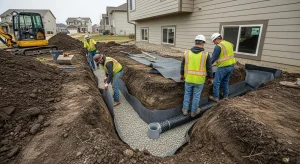
Drainage Tile Systems in Omaha: Protecting Foundations from Groundwater Drainage tile systems are among the most effective solutions for protecting
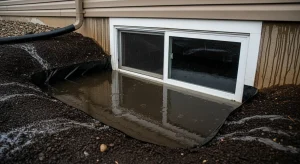
Basement Window Well Waterproofing: Preventing Leaks in Omaha Basement window wells are among the most common yet frequently overlooked sources
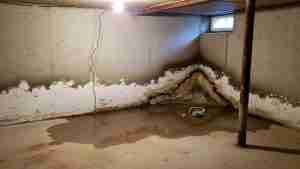
Signs Your Basement Needs Waterproofing: Omaha Homeowner Checklist Your basement speaks volumes about your home’s foundation health, but many Omaha
Signs of Basement Water Damage in Omaha Homes: Early Warning Checklist Early detection of basement water damage can save Omaha