Why Omaha Basements Leak: Clay Soil, Water Tables & Foundation Challenges
Why Omaha Basements Leak: Clay Soil, Water Tables & Foundation Challenges Basement leaks plague thousands of Omaha homeowners every year,




Early detection of basement water damage can save Omaha homeowners thousands of dollars in repair costs and prevent the devastating structural failures that result from ignoring warning signs until problems become catastrophic. Water damage doesn’t announce itself with dramatic flooding in most cases. Instead, it begins subtly with minor indicators that are easy to overlook, dismiss as insignificant, or misinterpret as unrelated issues. By the time water problems become undeniable through major flooding or severely damaged foundations, extensive deterioration has already occurred, requiring repairs costing tens of thousands of dollars that early intervention could have prevented entirely.
Understanding what to look for and recognizing the significance of various warning signs empowers you to catch problems while solutions remain relatively affordable and straightforward. The indicators described in this comprehensive checklist appear well before catastrophic failure. They are visible to homeowners who know where to look and what these signs reveal about underlying water damage developing in their basements.
This early warning checklist provides Omaha homeowners with the knowledge needed to identify basement water damage in its earliest stages, understand what each indicator means about the severity of problems, determine which signs require immediate action versus monitoring, and make informed decisions about protecting your home before minor issues escalate into major structural and health crises.
These clear signs demonstrate that water is actively entering your basement and that immediate waterproofing attention is necessary.
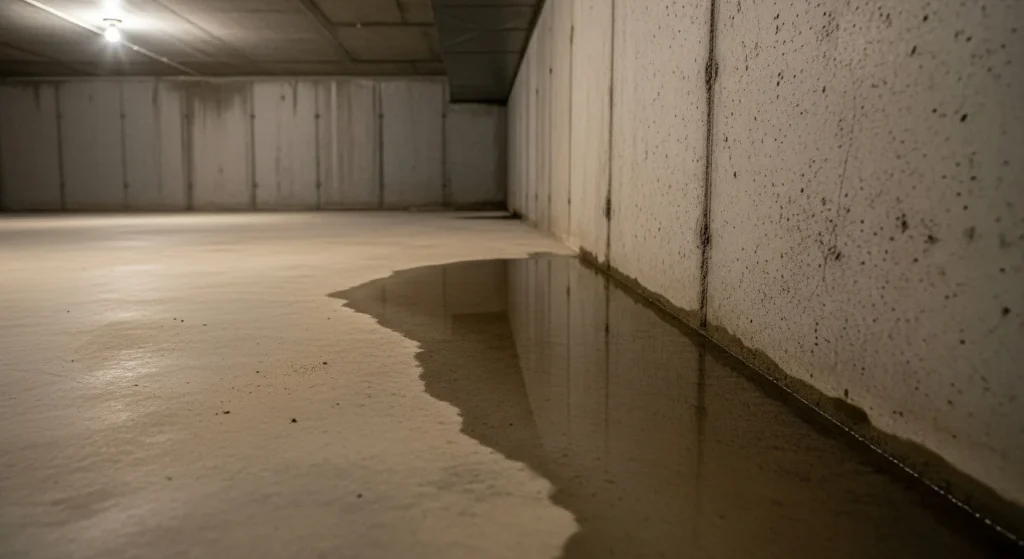
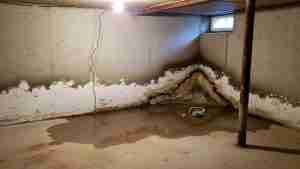
Water pooling on your basement floor represents the most obvious indication that waterproofing is failing. When you discover standing water, note several key details to help diagnose the source and severity of the problem.
Observe the timing of water appearance relative to rainfall. Water appearing during or immediately after rain indicates that surface water is reaching your foundation due to inadequate exterior drainage or grading problems. Water appearing several hours or even days after rain suggests groundwater infiltration through saturated soil surrounding your foundation.
Document where water accumulates. Puddles consistently forming along walls, particularly near the floor-wall joint, indicate infiltration through foundation walls or the vulnerable seam where basement floors meet walls. Water pooling in the basement center suggests problems with floor slabs themselves, subsurface water pressure, or rising groundwater.
Pay attention to water quantity and frequency. Occasional small puddles during only the most extreme storms indicate problems different from regular flooding during moderate rain. Increasing water volumes over time signal progressive waterproofing failure requiring urgent intervention.
Even occasional water infiltration shows that your waterproofing cannot withstand Omaha’s weather conditions. Systems must protect during worst-case scenarios because damage occurs during extreme events when inadequate protection fails.
Water actively flowing from cracks, seeping through concrete, or streaming from floor-wall joints during rain demonstrates that hydrostatic pressure is forcing water through your foundation. This isn’t minor dampness but active infiltration, showing that water pressure has overwhelmed the existing waterproofing.
Look for distinct water trails down walls that appear during storms, damp spots that expand and darken as rain continues, moisture emerging from specific cracks or deteriorated mortar joints, and water flowing from the cove joint where floors meet walls.
Note which areas show the most severe seepage. Concentrated infiltration at specific locations indicates foundation vulnerabilities at those points. Widespread seepage across multiple areas suggests systemic waterproofing failure requiring comprehensive solutions rather than targeted repairs.
The presence of active seepage demonstrates that exterior drainage is inadequate to prevent water accumulation and that foundation waterproofing is insufficient to withstand the resulting pressure. Both issues require attention for comprehensive protection.
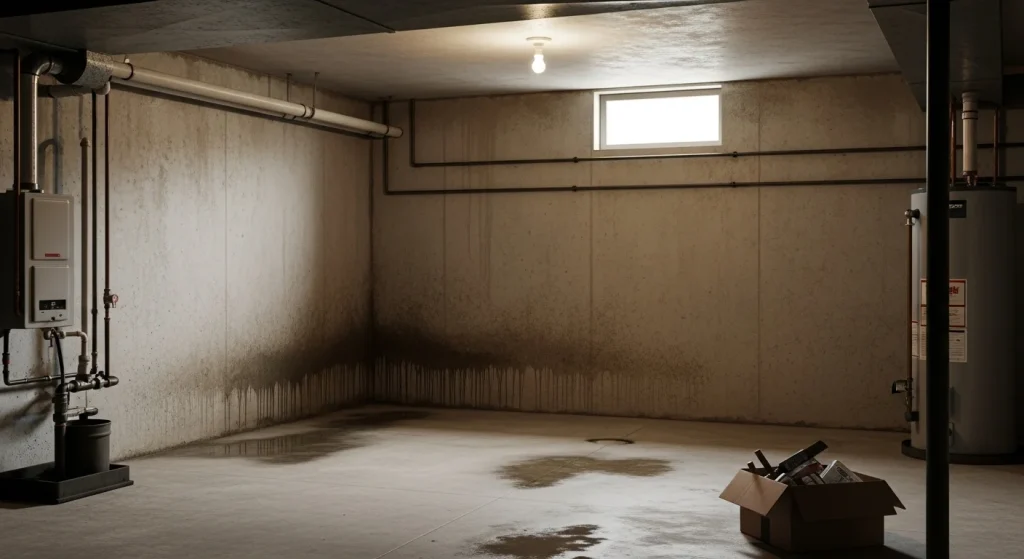
Even when water isn’t currently visible, evidence of previous infiltration provides critical information. Water stains on basement walls, particularly those with distinct high-water marks, indicate infiltration has occurred and will likely recur under similar weather conditions.
These stains typically appear as dark discoloration with defined edges showing where water reached during past events. Multiple tide lines at different heights indicate repeated infiltration episodes, each reaching different levels based on storm severity and groundwater conditions.
The stains might be accompanied by mineral deposits, efflorescence, or rust staining from corroding foundation elements. All variations indicate that water has penetrated your foundation with sufficient volume and frequency to leave permanent evidence.
Historical watermarks predict future problems. Water that previously entered will re-enter under comparable conditions unless waterproofing improvements prevent recurrence. Don’t dismiss old stains as irrelevant ancient history. There are warnings of ongoing vulnerability.
Basements that flood during Omaha’s heavy thunderstorms obviously need waterproofing improvements. However, many homeowners rationalize occasional flooding as acceptable during “extreme” events rather than recognizing it as evidence of inadequate protection.
Your waterproofing should withstand severe storms that dump 2 to 4 inches in a few hours, which occur regularly during Omaha’s spring and summer storm seasons. If your basement floods during these events, your protection is insufficient. The flooding will recur, and each event will cause cumulative damage while creating health hazards from mold growth and material deterioration.
Document flooding depth, affected areas, and weather conditions that triggered the event. This information helps waterproofing professionals diagnose causes and design appropriate solutions.
Water problems often manifest as excess moisture before obvious flooding occurs, making these indicators important for early detection.
Foundation walls that feel damp, cool, or wet to the touch indicate moisture is penetrating through the concrete even without visible water accumulation. Conduct a simple test by running your hand along the basement walls, particularly the lower sections near the floor, where water pressure is most significant.
Persistent dampness or notable coolness compared to upper wall sections indicates active water infiltration. Check walls several days after rain. If dampness persists long after storms end, water is continuously penetrating through foundations rather than just briefly during peak precipitation.
This constant moisture exposure accelerates concrete deterioration, creates ideal conditions for mold growth, and signals that waterproofing is inadequate to prevent infiltration even when you don’t see standing water.
Heavy condensation on basement walls, cold water pipes, or windows indicates very high humidity, typically caused by water infiltrating through the foundation. While some condensation is normal during humid Omaha summers, excessive moisture suggests problems beyond atmospheric humidity.
Warning signs include water droplets forming on walls and running down surfaces, pipes that constantly “sweat” with moisture accumulation, windows perpetually fogged or covered with condensation, and surfaces that feel wet to the touch despite adequate ventilation.
This level of condensation indicates humidity far exceeding normal ranges, typically caused by water penetrating foundations and evaporating into basement air faster than ventilation can remove it.
If your dehumidifier runs continuously or basement humidity consistently exceeds 60 percent despite dehumidification efforts, excess moisture is entering from sources beyond atmospheric humidity. Foundation water infiltration represents the most common source.
Monitor how much water your dehumidifier collects daily. If you’re emptying buckets containing multiple gallons daily or if the unit runs almost continuously, substantial moisture is infiltrating through your foundation. This volume demonstrates the inadequacy of the waterproofing, even without visible standing water.
Calculate the moisture removal rate. Dehumidifiers removing several gallons daily in basements with no other significant moisture sources clearly indicate foundation infiltration requiring waterproofing improvements.
That characteristic basement smell of mustiness or mildew indicates mold and mildew growth fueled by excess moisture from water infiltration. Even without visible mold, the odor suggests it’s growing somewhere in your basement, likely behind stored items, in wall cavities, in insulation, or in other hidden locations.
The smell intensifies during humid weather and may diminish during dry periods, but its presence at any time signals moisture levels high enough to support mold colonization. Since mold requires sustained moisture to establish and grow, these odors indicate chronic rather than occasional moisture problems.
Don’t mask odors with air fresheners or deodorizers. The smell is a symptom pointing to underlying water infiltration that waterproofing must address. Eliminating the moisture source is the only permanent solution.
Those white, chalky, or crystalline deposits appearing on concrete basement walls are called efflorescence. This occurs when water moves through concrete, dissolving minerals and carrying them to the surface, where they’re deposited as water evaporates.
Light efflorescence indicates minor moisture movement through concrete. Heavy, thick deposits signal substantial water penetration happening regularly over extended periods. Either level proves water is infiltrating through your foundation, even without visible liquid water.
Efflorescence often appears before noticeable cracks or water damage become visible, making it an important early warning indicator. You can brush these deposits away, but they return as long as moisture continues to penetrate the concrete. Address the water source causing efflorescence before it leads to more serious structural problems.
Water damage frequently causes structural symptoms that indicate ongoing deterioration requiring waterproofing intervention.
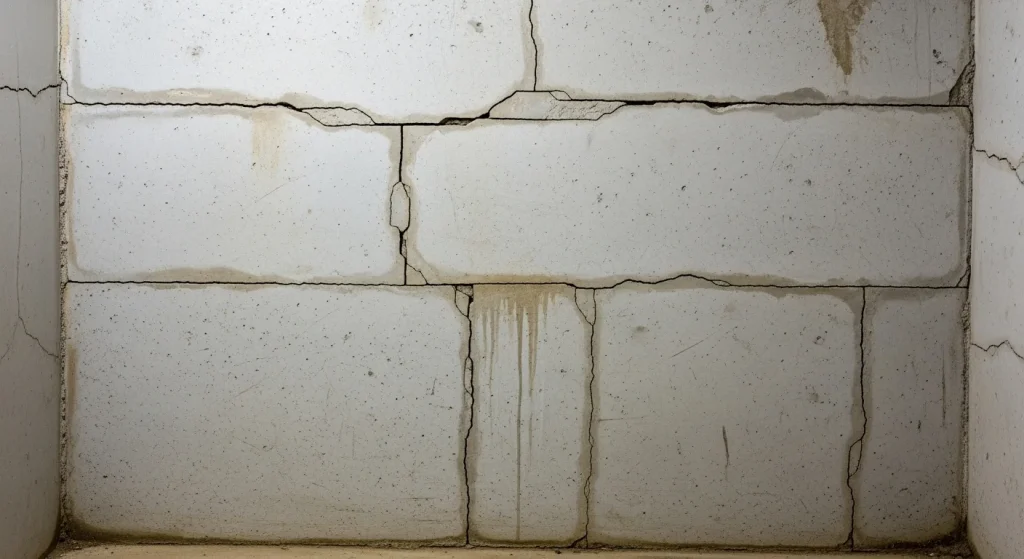
Cracks in foundation walls provide both pathways for water infiltration and evidence of structural stress often caused by water-related pressure or movement. Understanding crack characteristics helps assess severity.
Horizontal cracks running across foundation walls indicate significant lateral pressure on the walls from water-saturated soil. Even hairline horizontal cracks indicate severe conditions requiring immediate professional assessment, as they signal dangerous pressure that will worsen without intervention.
Vertical cracks wider than 1/4 inch or actively widening over time indicate foundation movement or stress. Document crack width with dated photos, including a ruler for scale. Cracks that widen progressively over weeks or months confirm active foundation problems.
Diagonal or stair-step cracks, particularly those following mortar joints in block foundations, suggest differential settlement where one foundation section has sunk more than adjacent areas. This often results from water eroding foundation support or causing soil consolidation beneath footings.
Any crack actively leaking water during or after rain proves that hydrostatic pressure exists, and waterproofing is inadequate to prevent infiltration under that pressure. These active leaks require immediate attention.
Foundation walls that curve inward, show visible bulging, or lean from vertical indicate severe pressure problems from water-saturated soil—even subtle bowing of just an inch or two signals dangerous conditions that will progressively worsen without intervention.
Check for bowing by holding a long, straight edge or stretching a string horizontally along walls at various heights. Any gap between the string and the wall surface reveals inward deflection. Compare measurements over time to determine if bowing is stable or increasing.
Bowing walls require both structural stabilization to prevent progressive failure or collapse and comprehensive waterproofing to eliminate the water pressure causing the problem. This represents one of the most serious foundation conditions requiring urgent professional assessment and repair.
Cracks in basement floor slabs, particularly those that widen over time or follow distinct patterns, can indicate water pressure from below pushing against slabs. This subsurface hydrostatic uplift occurs when water beneath basement floors creates upward pressure.
Floor sections that appear raised, uneven, or higher than they were previously may indicate heaving from water pressure. In severe cases, you might observe floor cracks containing moisture or dampness, indicating that water is actively present beneath the slabs.
Walk across the basement floors, noting any unevenness, soft spots, or areas that feel different from the surrounding sections. These variations often indicate subsurface water problems affecting slab integrity.
Water-related foundation settlement creates various symptoms visible throughout your home, not just in basements. These include cracks in walls above foundations radiating from corners or above doorways; doors and windows that stick or won’t close properly; uneven or noticeably sloping floors; and gaps appearing between walls and ceilings, or between walls and floors.
These symptoms indicate foundation movement often caused by water undermining support through soil erosion, clay shrinkage creating voids beneath footings, or differential moisture causing uneven settlement where one area experiences different conditions than adjacent sections.
Progressive worsening of these symptoms, where problems increase noticeably over months or years, confirms ongoing foundation movement rather than one-time settling. This active movement typically indicates water problems that require drainage and waterproofing improvements to prevent further deterioration.
Problems visible outside your home often indicate waterproofing inadequacy before interior damage becomes obvious.
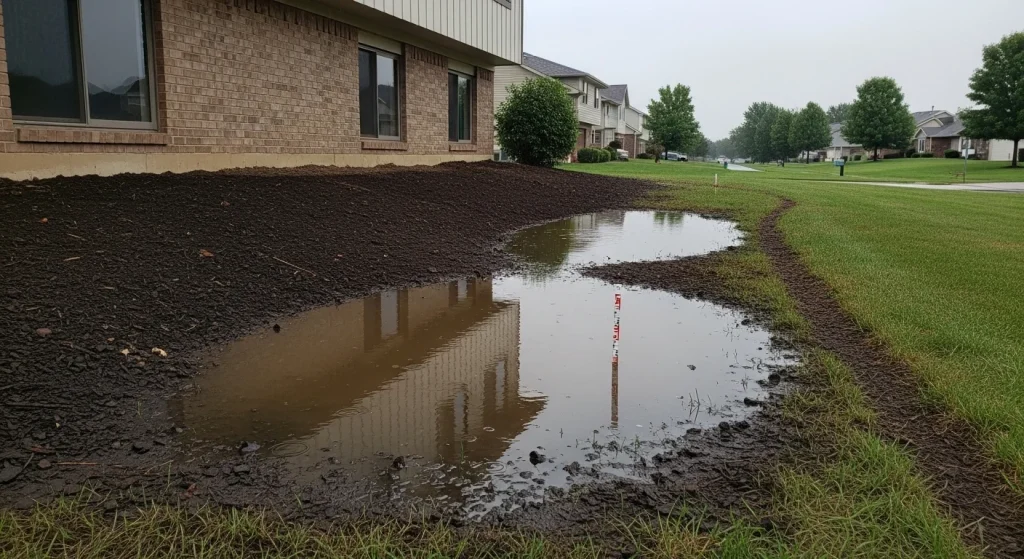
Water pooling within 10 feet of your foundation after rain, soil that remains soggy for days following storms, or visible water flowing toward rather than away from your home all indicate drainage problems that overwhelm waterproofing systems.
Check grading around your foundation perimeter. Ground should slope away at a minimum of 2 to 3 percent (3 to 4 inches of drop over 10 feet). Level grading or negative slopes that direct water toward foundations can create saturation, leading to infiltration and structural damage.
Look for erosion patterns, channels, or gullies showing water flow paths toward your foundation. Soil erosion around foundations can undermine structural support while creating concentrated infiltration pathways.
Downspouts discharging within a few feet of foundations dump enormous roof water volumes exactly where you don’t want them. A typical 2,000-square-foot roof sheds over 1,200 gallons per inch of rain. If this discharges directly at your foundation, no amount of waterproofing can adequately protect against the concentrated saturation.
Warning signs include erosion or channels at downspout discharge points, standing water near foundations after rain, vegetation dying or growing poorly near discharge areas, and staining or algae growth on foundations below downspouts.
Gutters that overflow during rain due to clogs or inadequate capacity create similar problems by allowing roof water to cascade down walls directly against foundations.
Gaps between soil and foundation walls indicate that settlement, erosion, or clay shrinkage has created depressions that collect water against foundations. Check for visible gaps of an inch or more, soil pulled away from foundation walls, areas where foundation walls are exposed above what was the original grade level, and depressions around foundation perimeters.
These gaps and depressions allow water to flow directly against foundations without any soil buffer, concentrating infiltration at vulnerable areas while eliminating the slight protection that well-graded soil provides.
Some warning signs appear primarily during specific conditions, providing important diagnostic clues.
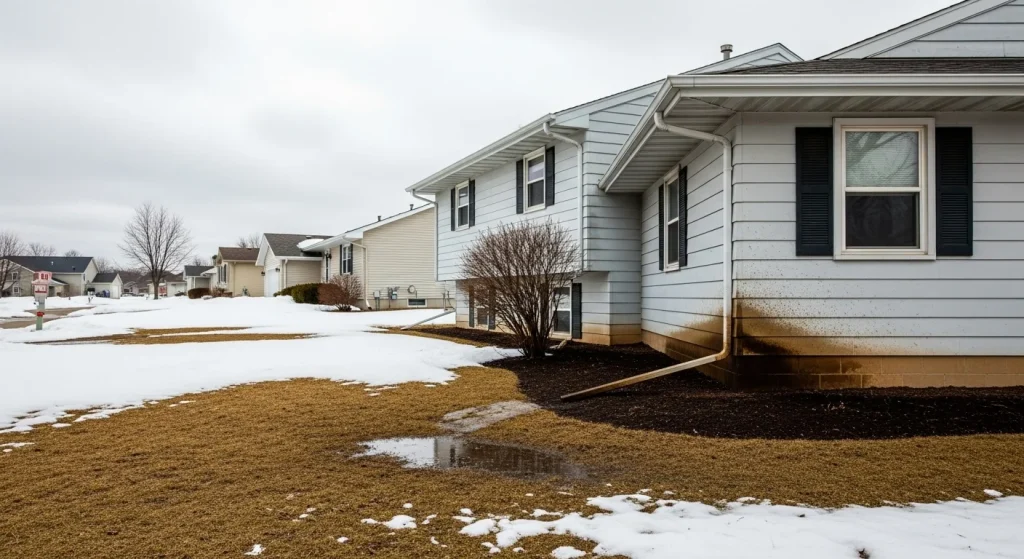
Water infiltration or increased dampness during spring, particularly during snowmelt, often indicates that frozen ground is preventing normal drainage. Water from melting snow cannot drain downward through frozen soil, so it remains in the upper soil layers, saturating foundations.
This seasonal pattern suggests that drainage capacity is inadequate for wet-season conditions and that waterproofing cannot withstand the sustained pressure from Omaha’s springs.
Problems that appear only during heavy downpours or worsen noticeably as storm intensity increases indicate that waterproofing cannot handle peak water volumes. Protection must withstand severe storms that dump several inches in a matter of hours, not just gentle rain.
If basement dampness increases dramatically during intense storms or if you see water only during heavy rain, your waterproofing is marginal. It will eventually fail as conditions worsen or as waterproofing systems degrade.
When you identify multiple signs from this checklist, particularly combinations of moisture indicators and structural symptoms, a professional waterproofing assessment becomes necessary immediately.
Don’t wait to see if problems worsen or hope they’ll resolve on their own. Water damage is progressive. Minor issues today become major failures tomorrow. The most cost-effective intervention occurs at the earliest detection stage when solutions remain relatively affordable and straightforward.
Contact qualified waterproofing professionals for a comprehensive basement evaluation. Expert assessment identifies all water sources, diagnoses underlying causes, and recommends appropriate solutions tailored to your home’s specific conditions and budget constraints.
Your basement and foundation support everything you value in your home. Protecting them through vigilant monitoring and timely response to warning signs represents essential stewardship of your property investment and one of the most important aspects of responsible homeownership in Omaha’s challenging climate and soil conditions. The early warnings are there for those who know how to recognize them. Use this checklist to catch problems while solutions remain manageable, protecting your home before water damage becomes the catastrophic failure that destroys property values and requires repairs costing many times what preventive waterproofing would have cost.
Why Omaha Basements Leak: Clay Soil, Water Tables & Foundation Challenges Basement leaks plague thousands of Omaha homeowners every year,

Financing Basement Waterproofing in Omaha: Payment Options & Programs Basement waterproofing in Omaha is a significant but essential investment that
Drainage Tile Systems in Omaha: Protecting Foundations from Groundwater Drainage tile systems are among the most effective solutions for protecting
Basement Window Well Waterproofing: Preventing Leaks in Omaha Basement window wells are among the most common yet frequently overlooked sources
Signs Your Basement Needs Waterproofing: Omaha Homeowner Checklist Your basement speaks volumes about your home’s foundation health, but many Omaha
Signs of Basement Water Damage in Omaha Homes: Early Warning Checklist Early detection of basement water damage can save Omaha