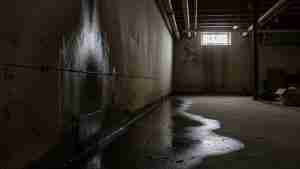
Why Omaha Basements Leak: Clay Soil, Water Tables & Foundation Challenges
Why Omaha Basements Leak: Clay Soil, Water Tables & Foundation Challenges Basement leaks plague thousands of Omaha homeowners every year,




French drains are among the most effective and widely used solutions for protecting Omaha basements from water infiltration and foundation damage. These drainage systems intercept and redirect water before it can create the hydrostatic pressure and saturation that cause basement flooding, foundation cracks, and structural deterioration. Whether installed in your basement or around your foundation’s exterior, French drains provide reliable water management, specifically designed for the challenging conditions created by Omaha’s clay soil and weather patterns.
Understanding how French drains work, the differences between interior and exterior installations, and which approach best suits your specific situation empowers you to make informed decisions about protecting your basement and foundation. While the name “French drain” sounds exotic, the concept is straightforward: providing an easy pathway for water to flow. Hence, it drains away from vulnerable areas rather than accumulating and causing damage.
The effectiveness of French drains in Omaha’s clay soil environment makes them particularly valuable for local homeowners. Clay’s poor drainage characteristics mean that water cannot dissipate naturally through soil absorption as it would in sandier regions. Instead, water must be actively collected and routed away through engineered drainage systems. French drains provide precisely this type of active water management, making them essential components of comprehensive basement waterproofing in our region.
This complete guide explains how French drains function, details both interior and exterior installation approaches, compares their relative advantages and applications, provides realistic cost expectations, and helps you determine which French drain system will best protect your Omaha basement from water damage.
French drains operate on simple but effective principles that make them ideal for managing water in challenging soil conditions.
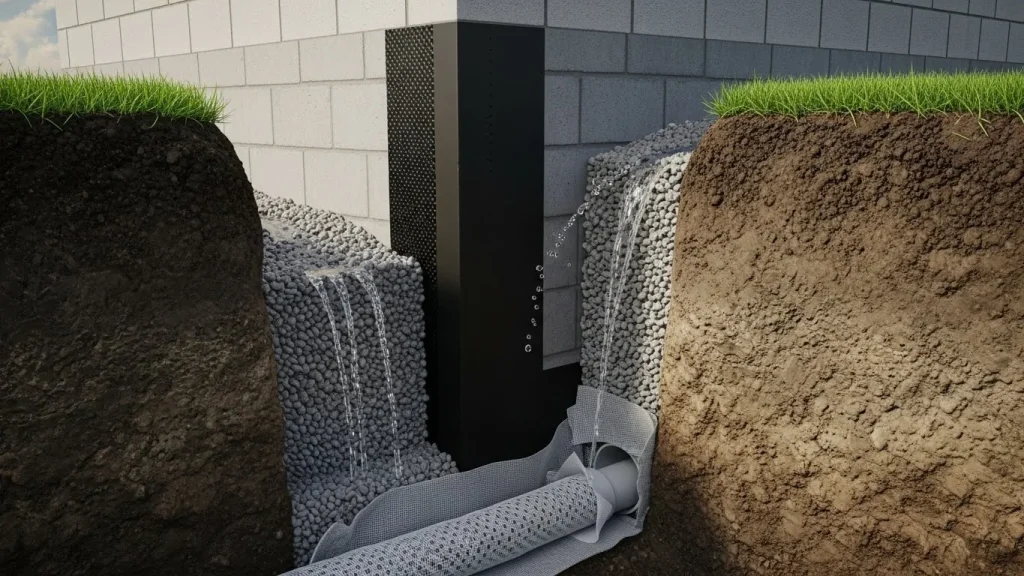
A French drain consists of a perforated pipe buried in a gravel-filled trench. Water seeps through the surrounding soil and gravel into the perforated pipe through the holes along its length. Once inside the pipe, water flows by gravity toward discharge points where it exits the system to safe locations away from your foundation.
The gravel surrounding the pipe serves multiple critical functions. It creates a permeable zone where water can flow easily, much more easily than through dense clay soil. It prevents soil from directly contacting the pipe, which would clog the perforations with sediment. It provides structural support for the pipe, avoiding collapse under soil weight. And it acts as a filter, allowing water to enter while keeping larger soil particles out.
Filter fabric, typically a geotextile material, wraps the gravel bed to prevent fine soil particles from migrating into the gravel over time. In Omaha’s clay soil, this fabric is particularly important because clay particles are small enough to infiltrate gravel beds and gradually clog the system without this protective barrier.
The pipe itself features perforations or slots along its length, typically positioned on the bottom half when installed. This placement allows water entering from below and the sides to drain into the pipe while preventing debris from entering through the top perforations.
Clay soil’s poor drainage makes French drains particularly effective in Omaha. Because water cannot drain through clay quickly, it accumulates against foundations, creating the hydrostatic pressure that causes basement flooding and foundation damage. French drains intercept this water before it reaches foundations, providing an easy drainage pathway that water naturally follows.
The gravel bed creates a high-permeability zone in otherwise impermeable clay soil. Water flows to this zone preferentially because it offers far less resistance than the dense clay. This concentration effect makes French drains highly efficient at collecting water from relatively large areas and channeling it into controlled drainage systems.
The gravity-driven operation requires no mechanical equipment or electricity. As long as the pipe has adequate slope and connects to appropriate discharge points, the system functions automatically and continuously without power, requires no maintenance beyond occasional inspection, and requires no homeowner intervention.
Interior French drains installed inside basements provide effective water management without requiring foundation excavation.
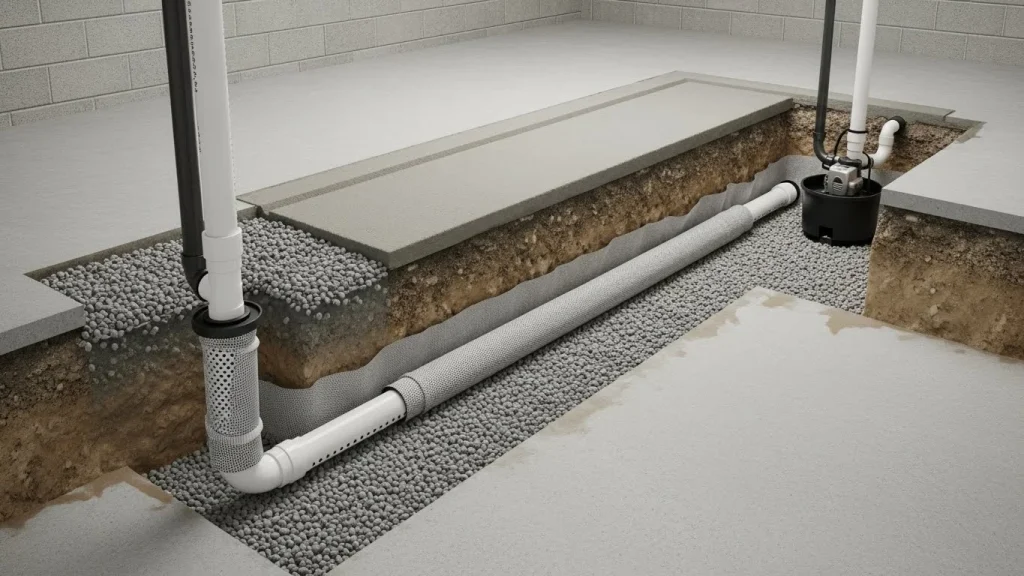
Interior installation begins by removing concrete strips along basement walls, typically 12 to 18 inches wide, to expose the footing area where the floor meets the walls. This reveals the critical floor-wall joint where water infiltration most commonly occurs.
Contractors excavate alongside footings to depths of 6 to 12 inches below the basement floor level. This creates space for a drainage pipe and a gravel bed positioned to intercept water at the lowest point where it naturally accumulates.
The excavated trench receives a layer of clean gravel, typically 3/4-inch stone, that provides good drainage while supporting the pipe. Perforated PVC pipe, usually 4 inches in diameter, is placed on the gravel bed with perforations positioned downward and to the sides.
More gravel surrounds and covers the pipe, filling the trench to within a few inches of floor level. Filter fabric may wrap the gravel, preventing concrete and soil particles from infiltrating the drainage bed over time.
The drainage pipe slopes continuously toward a sump pump basin located at the lowest point in the basement. All collected water flows by gravity to this basin, where a sump pump automatically activates to remove water and discharge it outside the home.
After pipe and gravel installation, contractors replace the concrete strip, though the seam remains visible. For finished basements, flooring can cover this seam, but homeowners should know its location for future maintenance access if needed.
Interior systems intercept water at the floor-wall joint before it can flood basement floors. This cove joint represents the most vulnerable entry point because it’s where floor slabs meet foundation walls, creating a natural weak point in basement construction.
The drainage system relieves hydrostatic pressure by providing an easy pathway for water to follow into controlled drainage rather than forcing through foundation walls into living spaces. This pressure relief reduces stress on foundation walls and waterproofing systems.
Water that seeps through foundation walls from exterior saturation drains into the interior system before accumulating on floors. While the system doesn’t prevent water from reaching foundations, it manages that water effectively before it causes damage.
The sump pump component provides active water removal regardless of exterior grade, water table levels, or site conditions. This makes interior systems effective even when gravity drainage to exterior discharge points isn’t possible.
Installation occurs entirely inside basements, avoiding excavation disruption to landscaping, hardscape, or exterior features. No trees, shrubs, patios, or driveways need to be removed or disturbed.
Costs are substantially lower than for exterior installations, typically $4,000 to $8,000 for average basements, compared to $8,000 to $15,000 or more for exterior systems. This makes interior approaches accessible for homeowners with limited budgets.
Installation completes quickly, usually within 2 to 4 days, rather than the 1 to 2 weeks required for exterior excavation work. Contractors contain work mess within the basement, protecting the rest of your home.
Interior systems work year-round regardless of weather, frozen ground, or other seasonal factors that can delay exterior excavation. This provides flexibility for emergencies requiring immediate water management.
The approach works in situations where exterior installation is impossible or impractical due to limited property access, adjacent structures, underground utilities, or other constraints.
Interior systems don’t prevent water from saturating foundation walls. Concrete remains exposed to moisture, which can cause long-term deterioration even when basements stay dry. This means foundation concrete experiences more moisture exposure than with exterior waterproofing approaches.
The systems manage water reactively once it reaches foundations, rather than proactively preventing it from reaching them in the first place. This represents symptom management rather than addressing root causes.
Sump pump operation requires electricity and generates noise when it activates. Power outages during severe storms can turn off primary pumps unless battery backup systems are installed.
The visible concrete seam creates aesthetic concerns for finished basements, though flooring can conceal it. The installation also reduces ceiling height slightly where drainage channels run, though this is typically minimal.
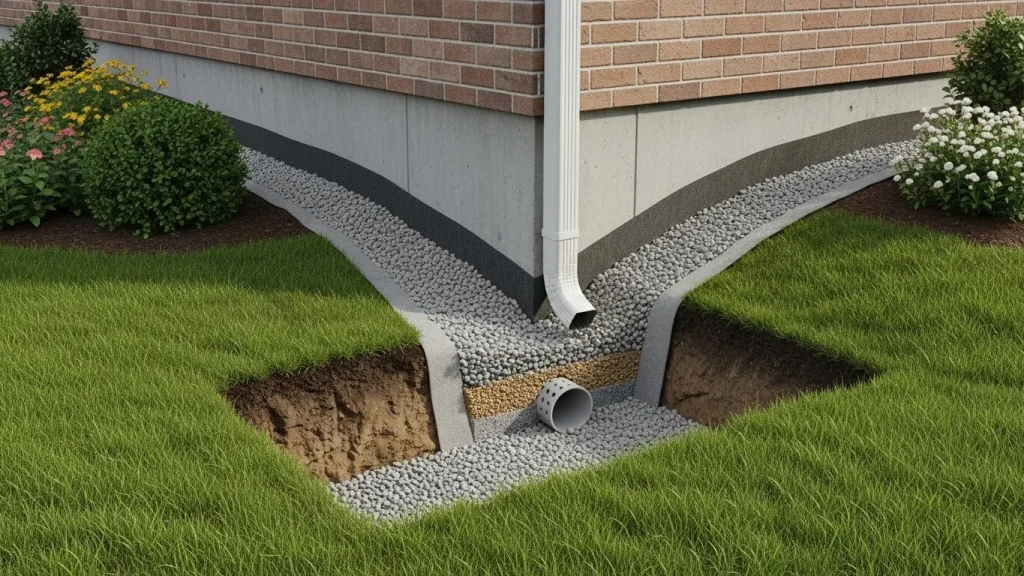
Exterior French drains installed around foundation perimeters provide comprehensive protection by preventing water from reaching foundations.
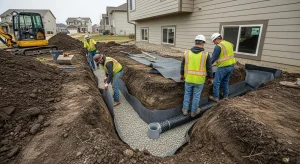
Exterior installation requires excavating around foundation perimeters to expose walls from grade down to footings, typically 8 to 10 feet deep. This major undertaking demands heavy equipment, careful utility location, and substantial site work.
Once footings are exposed, contractors install perforated pipe directly alongside them at the footing level, the lowest point where water would otherwise accumulate against foundations. This positioning intercepts groundwater and surface water before it can create pressure against walls.
The pipe sits on a gravel bed and is surrounded by additional gravel, creating a permeable drainage zone around foundation perimeters. Filter fabric wraps the gravel bed, preventing clay soil from migrating into the drainage area and clogging the system.
The drainage pipe requires a continuous slope, typically 1 to 2 percent, to ensure gravity flow toward discharge points. The pipe connects to solid drainage lines carrying collected water to storm sewers, daylight discharge points, or other approved locations where water can safely dissipate.
After drainage installation, contractors typically apply waterproofing membranes to foundation walls before backfilling. This combination of drainage and waterproofing provides maximum protection. The excavation is then backfilled, ideally with more permeable material than the original clay, and grading is restored to ensure surface water flows away from foundations.
Exterior systems intercept groundwater before it reaches foundation walls, preventing saturation and the resulting hydrostatic pressure. This proactive approach eliminates pressure rather than just managing its effects.
Surface water that would otherwise saturate soil around foundations drains into the system before it can cause problems. Heavy rain that would create temporary high-water conditions drains continuously, maintaining relatively dry conditions around foundations even during severe storms.
By keeping soil around foundations drier, exterior drains reduce clay soil expansion that creates lateral pressure against walls. Less saturated clay expands less dramatically, generating lower forces that cause less foundation stress and damage.
The systems protect the foundation concrete itself from constant moisture exposure. Drier conditions prevent the progressive concrete deterioration that saturated conditions cause over the course of decades.
Exterior systems prevent water from reaching foundations rather than just managing it once it arrives. This proactive approach provides superior long-term protection compared to reactive interior systems.
Drainage protects foundation walls from moisture, extending concrete life and reducing deterioration. This preserves structural integrity over decades rather than just preventing basement flooding.
Properly installed exterior systems last 50-plus years when constructed with quality materials and adequate protection from root intrusion and sediment. This longevity makes them cost-effective despite a high initial investment.
The systems reduce hydrostatic pressure against foundation walls, preventing the bowing and cracking that interior systems cannot stop. This structural protection extends beyond just keeping basements dry.
Excavation costs run substantially higher than interior installation, typically $8,000 to $15,000 or more for complete perimeter systems. Large equipment, extensive labor, and site restoration drive costs up.
Installation significantly disrupts properties through excavation that may require removing landscaping, portions of driveways or patios, or other features adjacent to foundations. Restoration adds time and expense to projects.
Weather and ground conditions limit installation seasons. Frozen ground prevents winter excavation in Omaha. Extremely wet conditions create difficult working environments. This limits practical installation to spring through fall.
Properties with limited access due to narrow side yards, adjacent structures, or terrain challenges may find exterior installation difficult or impossible. Equipment needs adequate space to maneuver around buildings.
Several factors determine which approach best suits your situation.
Severe chronic water problems, high water tables, or situations where foundations show structural stress from hydrostatic pressure benefit most from exterior systems despite higher costs. The comprehensive protection justifies the investment for severe conditions.
In moderate water infiltration, occasional seepage, or situations where foundations remain structurally sound, interior systems provide adequate protection at more manageable costs.
Limited budgets often make interior systems the only practical option. The $4,000 to $8,000 investment provides effective water management, though not as comprehensive as exterior approaches costing twice as much.
Adequate budgets or financing availability make exterior systems worth considering for their superior long-term protection and foundation preservation benefits.
Properties with mature landscaping, extensive hardscaping, or limited access make exterior installation impractical or prohibitively expensive due to removal and restoration costs. Interior systems work regardless of exterior constraints.
Properties with good access, minimal exterior features requiring preservation, or situations where landscaping renovation is planned anyway favor exterior installation.
Homeowners planning to remain in their properties for decades should consider exterior systems that provide 50-plus years of superior protection. The higher investment pays dividends over the long term.
Those planning to sell within 5 to 10 years find interior systems provide adequate protection without the full exterior investment. The transferable warranty that quality contractors provide adds value and buyer confidence.
New construction strongly favors exterior installation before backfilling. The incremental cost over basic construction is minimal compared to later excavation expenses.
Existing homes with established landscaping and occupied basements often find interior installation more practical despite exterior systems being theoretically superior.
Understanding realistic cost expectations helps with budgeting and decision-making.
Basic interior perimeter drainage with a sump pump costs $4,000 to $6,000 for average basements under 1,000 square feet. Larger basements or complex layouts increase costs to $6,000 to $8,000 or more.
Battery backup sump pump systems add $500 to $1,200 to total costs but provide critical protection during power outages, which are common during severe storms.
Complete exterior perimeter drainage, including excavation, pipe installation, waterproofing membrane application, and site restoration, costs $8,000 to $12,000 for average homes. Larger properties or difficult conditions push costs to $12,000 to $20,000 or higher.
Drainage board installation and premium waterproofing membranes add $2,000 to $4,000 but significantly enhance long-term protection.
Foundation depth determines the extent and cost of excavation. Deeper foundations require more digging, increasing labor and time requirements.
Soil conditions affect excavation difficulty. Dense clay, rocky soil, or high water tables increase costs by slowing digging and requiring additional precautions.
Site access limitations requiring hand digging or minor equipment increase costs by 25 to 50 percent compared to accessible sites that accommodate large excavators.
Landscaping and hardscape restoration add substantial costs for exterior work. Removing and replacing driveways, patios, or mature landscaping can double the total project expense.
Both interior and exterior systems require minimal yet essential maintenance to ensure continued effectiveness.
Test sump pumps quarterly by pouring water into basins to verify activation and proper discharge. Clean sump pits annually, removing accumulated sediment and debris.
Replace battery backup batteries every 3 to 5 years before they fail. Inspect discharge lines for clogs or freezing, particularly after winter.
Professional inspection and cleaning every 5 to 10 years prevents sediment buildup in drainage pipes. This maintenance costs $200 to $500 but extends system life significantly.
Keep surface grades proper to prevent water from flowing back toward foundations. Monitor soil settlement, which can create depressions that direct water toward drainage areas.
French drains, whether interior or exterior, provide highly effective water management for Omaha basements facing challenges from clay soil and severe weather. Understanding the differences between approaches, their relative costs and benefits, and which suits your specific situation helps you invest in protection that keeps your basement dry and your foundation sound for decades.
Whether you choose cost-effective interior systems that provide excellent water management or comprehensive exterior installations that offer maximum foundation protection, French drain installation is one of the best investments you can make in your Omaha home’s longevity, structural integrity, and freedom from the water damage that threatens every basement in our challenging climate and soil conditions.
Why Omaha Basements Leak: Clay Soil, Water Tables & Foundation Challenges Basement leaks plague thousands of Omaha homeowners every year,

Financing Basement Waterproofing in Omaha: Payment Options & Programs Basement waterproofing in Omaha is a significant but essential investment that
Drainage Tile Systems in Omaha: Protecting Foundations from Groundwater Drainage tile systems are among the most effective solutions for protecting
Basement Window Well Waterproofing: Preventing Leaks in Omaha Basement window wells are among the most common yet frequently overlooked sources
Signs Your Basement Needs Waterproofing: Omaha Homeowner Checklist Your basement speaks volumes about your home’s foundation health, but many Omaha
Signs of Basement Water Damage in Omaha Homes: Early Warning Checklist Early detection of basement water damage can save Omaha