Why Omaha Basements Leak: Clay Soil, Water Tables & Foundation Challenges
Why Omaha Basements Leak: Clay Soil, Water Tables & Foundation Challenges Basement leaks plague thousands of Omaha homeowners every year,




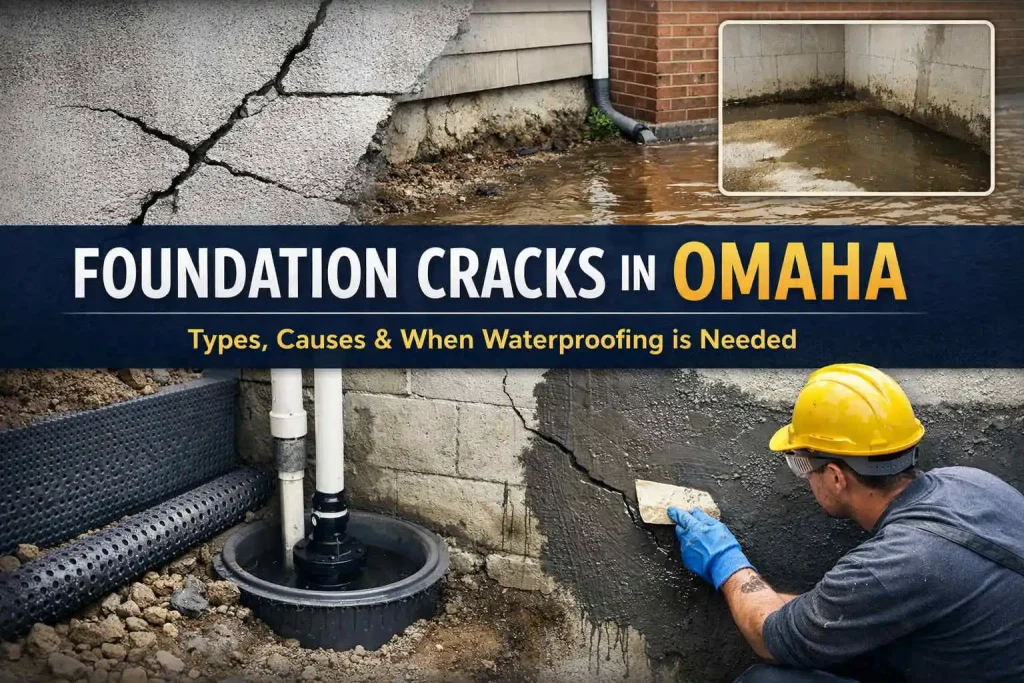
Foundation cracks strike fear into the hearts of homeowners, and for good reason. These visible fractures in your home’s structural base can indicate serious problems requiring expensive repairs or minor cosmetic issues that require minimal attention. The challenge for Omaha homeowners is distinguishing between the two and understanding when cracks signal the need for comprehensive waterproofing solutions rather than simple monitoring or minor repairs.
Not all foundation cracks are created equal. Some result from normal concrete curing and pose no structural threat or water infiltration risk. Others indicate progressive foundation failure from water damage, soil movement, or structural overload. In Omaha, where expansive clay soil creates unique stresses and freeze-thaw cycles progressively damage foundations, understanding crack types and their implications is essential to protecting your property investment.
The relationship between foundation cracks and waterproofing is critical because cracks result from water damage and create pathways for water infiltration, which causes further deterioration. This destructive cycle means that what starts as a minor crack can evolve into a significant structural and waterproofing crisis if left unaddressed. Recognizing this connection helps you make informed decisions about when crack repair alone is sufficient and when comprehensive waterproofing is necessary.
This complete guide explains every type of foundation crack Omaha homeowners encounter, details what causes these cracks in our specific soil and climate conditions, helps you assess crack severity and urgency, and provides clear guidance on when cracks indicate waterproofing is essential for protecting your home from progressive water damage.
Foundation cracks fall into distinct categories based on their direction, location, and characteristics. Each type reveals different information about underlying causes and required solutions.
Vertical cracks run up and down foundation walls, typically in relatively straight lines, though they may jog slightly to follow weak points in concrete. These are among the most common foundation cracks and are usually the least structurally serious.
Most vertical cracks result from concrete shrinkage during curing. As concrete dries and hardens over the first year after pouring, it contracts slightly. This shrinkage creates internal stresses that sometimes manifest as vertical cracks, particularly in walls with inadequate reinforcement or control joints.
In Omaha’s climate, thermal expansion and contraction contribute to vertical cracking. Seasonal temperature swings from below-zero winters to 100-degree summers cause concrete to expand and contract repeatedly. Over the years, this cycling can create or widen vertical cracks.
Minor vertical cracks, particularly those less than 1/8 inch wide and not widening over time, are often cosmetic rather than structural. However, any vertical crack provides a potential pathway for water infiltration, especially under the hydrostatic pressure standard in Omaha’s saturated clay soil.
Vertical cracks wider than 1/4 inch, those actively widening over time, or cracks accompanied by water infiltration require professional evaluation and typically need both structural repair and waterproofing attention.
Horizontal cracks running across foundation walls represent far more serious conditions than vertical cracks. These indicate tremendous lateral pressure on your foundation from the outside, typically from water-saturated soil.
In Omaha, horizontal cracks most commonly result from hydrostatic pressure in clay soil. When clay around your foundation becomes saturated during wet springs, it exerts enormous lateral pressure on the walls. Sustained pressure over weeks or months can exceed the foundation’s resistance, leading to horizontal cracking.
Expansive clay soil compounds the problem. As clay absorbs water, it swells and expands, generating additional pressure beyond the weight of the water alone. This expansion can create lateral forces exceeding 5,000 pounds per square foot, more than sufficient to crack concrete and cause progressive wall failure.
Even hairline horizontal cracks warrant immediate professional assessment, as they indicate pressure conditions that will worsen without intervention. As cracks widen, wall strength decreases, allowing pressure to cause additional damage more easily. This progressive failure accelerates once it begins.
Horizontal cracks often accompany inward wall bowing or bulging, indicating advanced structural compromise that requires both stabilization and comprehensive waterproofing to eliminate the pressure causing the damage.
Diagonal cracks angle across foundation walls, typically running at roughly 45-degree angles from corners or from points of stress concentration. These cracks usually indicate differential settlement, where one portion of your foundation has sunk or moved more than adjacent sections.
Settlement-related diagonal cracks often start at foundation corners and extend diagonally across walls. This pattern results from one section of the foundation settling while the rest remains stable, creating shear stress along the diagonal plane between settled and stable areas.
In Omaha, differential settlement is commonly caused by water-related soil problems. Water eroding soil beneath footings removes support, causing settlement in affected areas. Clay shrinkage during dry periods creates voids that allow localized settling. Varying moisture content across foundation areas causes clay to expand and contract at different rates, resulting in uneven movement.
Diagonal cracks require careful evaluation to determine whether settlement has stabilized or is still active. Progressive widening indicates ongoing movement requiring intervention, including foundation underpinning, soil stabilization, and waterproofing improvements addressing the water problems causing settlement.
Stair-step cracks follow mortar joints in block or brick foundations, creating a stepped pattern that ascends or descends across walls. These indicate a settlement similar to diagonal cracks but manifest differently due to the weak points that the mortar joints represent.
Block foundations crack along mortar lines because these joints represent the path of least resistance when stress develops. Rather than fracturing through solid concrete blocks, cracks follow the weaker mortar between blocks, creating the characteristic stair-step pattern.
The causes mirror those creating diagonal cracks in poured concrete foundations, primarily differential settlement from water-related soil problems. The stepped pattern doesn’t make these cracks less severe than diagonal cracks in solid concrete. Both indicate foundation movement requiring assessment and potential intervention.
Basement floor cracks follow various patterns, including straight lines, random branching networks, or cracks radiating from central points. These indicate different problems than wall cracks and require separate evaluation.
Shrinkage cracks in floor slabs result from concrete curing and typically appear as fine, random cracks within the first year after pouring. These are generally cosmetic unless they widen significantly or allow water seepage.
Structural floor cracks wider than 1/4 inch, or those showing vertical displacement in which one side sits higher than the other, indicate more serious problems. These can result from settling fill beneath slabs, inadequate reinforcement, or hydrostatic pressure from below, causing heaving.
Floor cracks that contain moisture or exhibit efflorescence indicate water beneath slabs, suggesting subsurface drainage problems that may require waterproofing solutions, such as subslab drainage systems or vapor barriers.
Understanding the causes of foundation cracks in Omaha’s specific conditions helps you recognize when waterproofing is necessary to prevent progressive damage.
Omaha’s clay-heavy soil represents the primary cause of foundation cracking in the region. Clay’s expansive properties create forces that foundations cannot withstand over time without proper protection.
When clay absorbs water during wet periods, it expands by up to 10 percent or more in volume. This expansion generates enormous lateral and upward pressure against foundations. The sustained pressure during Omaha’s wet springs causes horizontal cracking and progressive wall bowing.
When clay dries, it shrinks back to its original volume or smaller, pulling away from foundations and creating voids beneath footings. Foundations settle into these voids, causing diagonal and stair-step cracking from differential settlement.
This expansion-contraction cycle repeats endlessly. Each cycle adds stress and damage. Small cracks widen, new cracks form, and structural integrity progressively diminishes. The cumulative effect over decades can destroy foundations that were originally sound.
Clay’s poor drainage means water cannot percolate through it quickly. After heavy rain or during wet seasons, clay around foundations remains saturated for extended periods, creating sustained hydrostatic pressure.
This lateral pressure pushes against foundation walls, with the force increasing with depth. At 8 feet below grade, pressure can reach 500 pounds per square foot. Over large wall areas, this amounts to many tons of force seeking out any weakness.
The sustained nature of pressure in clay soil causes the most damage. Sandy soils drain within hours or days, relieving pressure quickly. Clay maintains pressure for weeks or months, allowing time for progressive cracking and wall movement that brief pressure wouldn’t cause.
Omaha experiences 30 to 40 freeze-thaw cycles each winter as temperatures fluctuate between freezing and above-freezing. Water in foundation cracks freezes and expands by approximately 9 percent, generating forces exceeding 25,000 pounds per square inch.
This expansion progressively widens cracks over successive winters. A hairline crack this fall becomes noticeably wider by spring after dozens of freeze-thaw cycles. The widening accelerates because larger cracks allow more water to penetrate, thereby increasing the expansion force.
Foundations in saturated clay soil experience the worst freeze-thaw damage because moisture is constantly available. Proper waterproofing that keeps foundations dry prevents this progressive deterioration by eliminating the water necessary for the freeze-thaw process.
Inadequate surface drainage, directing water toward foundations rather than away, creates sustained saturation that causes both hydrostatic pressure and soil movement problems.
Common drainage issues include improper grading with level or negative slopes toward foundations, downspouts discharging within a few feet of foundations, and absent or nonfunctional foundation drainage systems that allow groundwater accumulation.
These drainage failures keep clay soil around foundations continuously saturated, maintaining maximum expansion pressure and providing unlimited water for infiltration through any cracks that develop.
Water eroding soil beneath foundations removes support, causing settlement. In Omaha, concentrated water flows from poor drainage can wash away supporting soil, creating voids that allow foundation sections to sink.
Clay soil consolidation due to varying moisture levels also causes settlement. As clay dries and is compressed by foundation weight, it becomes denser and occupies less volume. This consolidation allows foundations to settle, particularly in areas with the most significant moisture variation.
While less common than water-related causes, excessive structural load can crack foundations. This includes inadequate original design, additions made without proper foundation reinforcement, or loss of soil bearing capacity, reducing the foundation’s ability to support loads it once handled adequately.
Determining the severity of cracks helps you prioritize repairs and decide when waterproofing is necessary.
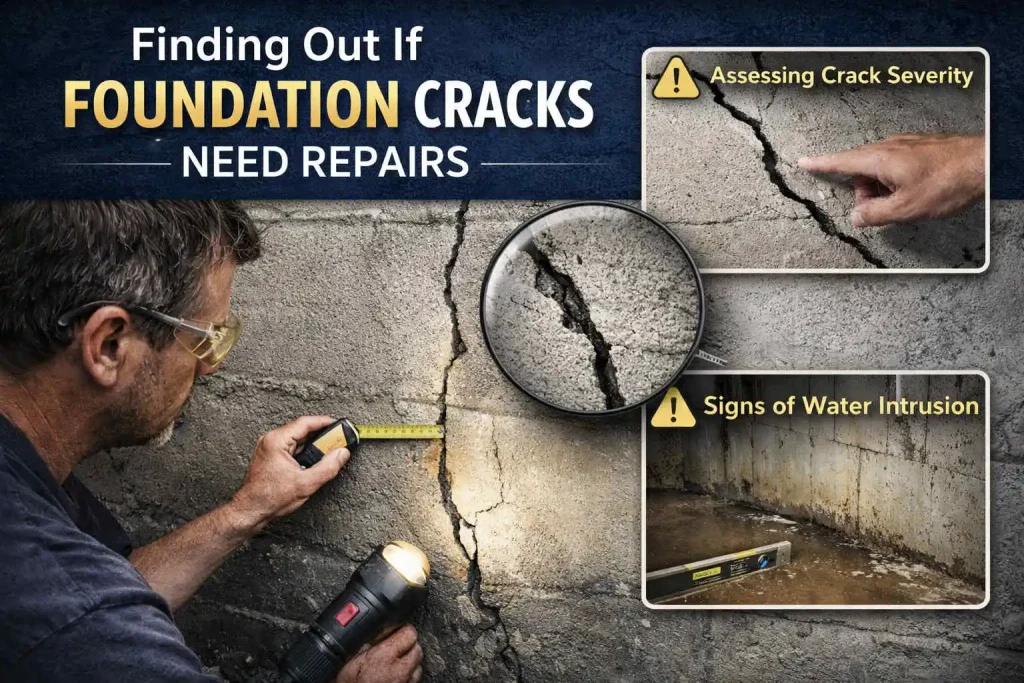
Hairline cracks less than 1/16 inch wide typically represent minor issues, though they still provide pathways for water infiltration. Cracks between 1/16 and 1/4 inch wide require monitoring and may need repair depending on location and type. Cracks wider than 1/4 inch indicate more serious problems deserving professional evaluation. Cracks exceeding 1/2 inch wide represent significant structural concerns requiring immediate attention.
Use a crack width gauge or a simple ruler to measure the crack width at its widest point. Document measurements with dated photos for comparison over time.
Active cracks that widen over time indicate ongoing foundation movement or stress requiring intervention. Monitor cracks by marking their ends with a pencil and dating the marks. Check monthly to determine if cracks are extending. You can also place thin strips of tape across cracks to date them. If the tape breaks, the cracks are widening.
Stable cracks that don’t widen over 6 to 12 months may represent old damage that has stabilized. However, even stable cracks allow water infiltration and may reactivate under changed conditions.
Cracks in basement walls below grade face higher water pressure than cracks above grade. Lower wall sections near the floor experience the highest hydrostatic pressure and are most likely to leak.
Cracks at critical structural points, including corners, around windows, or where walls meet floors, indicate more serious conditions than cracks in the middle of otherwise solid walls.
Cracks accompanied by water infiltration indicate that waterproofing is inadequate and that hydrostatic pressure is present. Cracks with wall bowing or bulging indicate structural failure in progress. Cracks appearing alongside settlement symptoms, such as stuck doors or sloping floors, suggest foundation movement due to soil problems.
Multiple associated symptoms indicate more serious conditions requiring comprehensive solutions rather than simple crack repair alone.
Specific crack characteristics and conditions indicate that waterproofing becomes necessary beyond just repairing the cracks themselves.
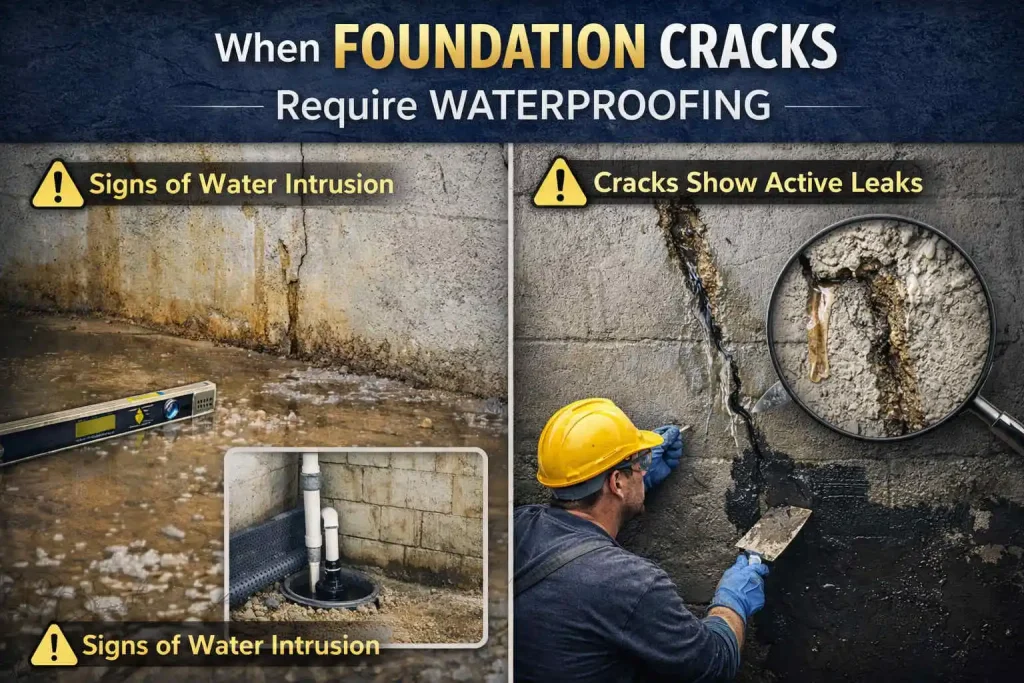
Any crack actively leaking water during or after rain proves that hydrostatic pressure exists and that waterproofing is inadequate. Simply sealing the crack addresses the symptom but not the cause. Water will continue seeking entry through other weak points.
Comprehensive waterproofing becomes necessary to eliminate the pressure driving infiltration. This includes improving exterior drainage to prevent water accumulation and installing waterproofing barriers that prevent infiltration even under pressure.
Horizontal cracks always indicate lateral pressure from saturated soil. Repairing cracks without addressing the water pressure causing them provides only temporary relief. Pressure will reopen repaired cracks or create new ones nearby.
These situations require comprehensive exterior waterproofing with drainage systems that prevent soil saturation and relieve hydrostatic pressure. Interior drainage providing pressure relief may suffice when exterior work isn’t feasible, but exterior solutions provide superior long-term results.
Foundations developing multiple cracks or showing progressive worsening indicate systemic problems rather than isolated incidents. These patterns suggest sustained pressure or movement from ongoing water problems.
Comprehensive waterproofing addresses underlying causes rather than repeatedly repairing individual cracks as they appear. This approach prevents the progressive damage that eventually leads to foundation failure despite repeated crack repairs.
Properties with chronic basement dampness, high humidity, or known high water tables need waterproofing even if cracks don’t currently leak. The presence of cracks in these conditions creates vulnerabilities that will eventually allow infiltration as pressure varies seasonally.
Proactive waterproofing prevents future infiltration rather than waiting for leaks to develop. This approach costs less than emergency repairs when infiltration begins and prevents the water damage that occurs before problems are discovered.
Diagonal or stair-step cracks resulting from water eroding foundation support or from clay shrinkage creating voids require waterproofing to prevent continued settlement. Simply repairing cracks without addressing water problems allows settlement to continue, reopening repairs and building new damage.
Comprehensive drainage prevents water erosion and maintains more consistent soil moisture, helping prevent settlement and cracking. This foundation stabilization, combined with waterproofing, provides lasting solutions.
When waterproofing is necessary, crack repair becomes one component of comprehensive solutions rather than a standalone fix.
Epoxy injection fills cracks with a structural adhesive that bonds concrete and creates waterproof seals. This works for both structural repair and waterproofing, making it ideal for cracks compromising foundation integrity.
When combined with exterior or interior waterproofing systems addressing pressure causes, epoxy-repaired cracks remain stable and waterproof long-term.
Polyurethane foam injection fills cracks with expanding material, creating flexible, waterproof barriers. This works well for active cracks that experience slight movement and for situations where exterior access isn’t possible.
Combined with drainage systems relieving pressure, polyurethane repairs prevent infiltration while accommodating minor foundation movement that rigid repairs cannot tolerate.
The most effective approach combines crack repair with comprehensive waterproofing, including exterior drainage to prevent soil saturation and pressure buildup, waterproofing membranes on foundation exteriors to create barriers even if new cracks develop, and interior drainage systems to provide pressure relief and manage any water reaching foundations.
This integrated approach addresses both existing cracks and the underlying conditions that caused them, preventing recurrence while protecting against future damage.
Foundation cracks in Omaha homes require careful evaluation, considering crack type, width, activity, location, and associated symptoms. While some cracks represent minor cosmetic issues that require only monitoring, many indicate serious water-related problems, where comprehensive waterproofing is essential to prevent progressive damage.
The relationship between foundation cracks and water problems is cyclical and destructive. Water causes cracks through pressure and soil movement. Cracks allow more water infiltration. Additional water creates more pressure and movement. The cycle accelerates until comprehensive waterproofing interrupts it.
When you discover foundation cracks, particularly horizontal cracks, actively widening cracks, or cracks allowing water infiltration, contact qualified foundation and waterproofing professionals for a thorough evaluation. Expert assessment determines whether simple crack repair suffices or whether comprehensive waterproofing is necessary to address underlying causes and prevent progressive failure.
Your foundation supports everything you value in your home. Protecting it from the progressive damage that water causes through cracking represents essential stewardship of your property investment. Early intervention when cracks first appear costs far less than waiting until advanced deterioration requires extensive structural repairs and emergency waterproofing to save failing foundations from collapse.
Why Omaha Basements Leak: Clay Soil, Water Tables & Foundation Challenges Basement leaks plague thousands of Omaha homeowners every year,

Financing Basement Waterproofing in Omaha: Payment Options & Programs Basement waterproofing in Omaha is a significant but essential investment that
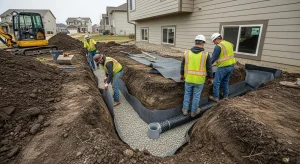
Drainage Tile Systems in Omaha: Protecting Foundations from Groundwater Drainage tile systems are among the most effective solutions for protecting
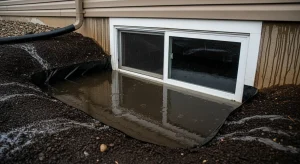
Basement Window Well Waterproofing: Preventing Leaks in Omaha Basement window wells are among the most common yet frequently overlooked sources
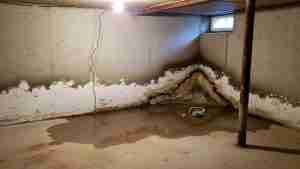
Signs Your Basement Needs Waterproofing: Omaha Homeowner Checklist Your basement speaks volumes about your home’s foundation health, but many Omaha
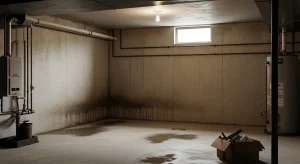
Signs of Basement Water Damage in Omaha Homes: Early Warning Checklist Early detection of basement water damage can save Omaha